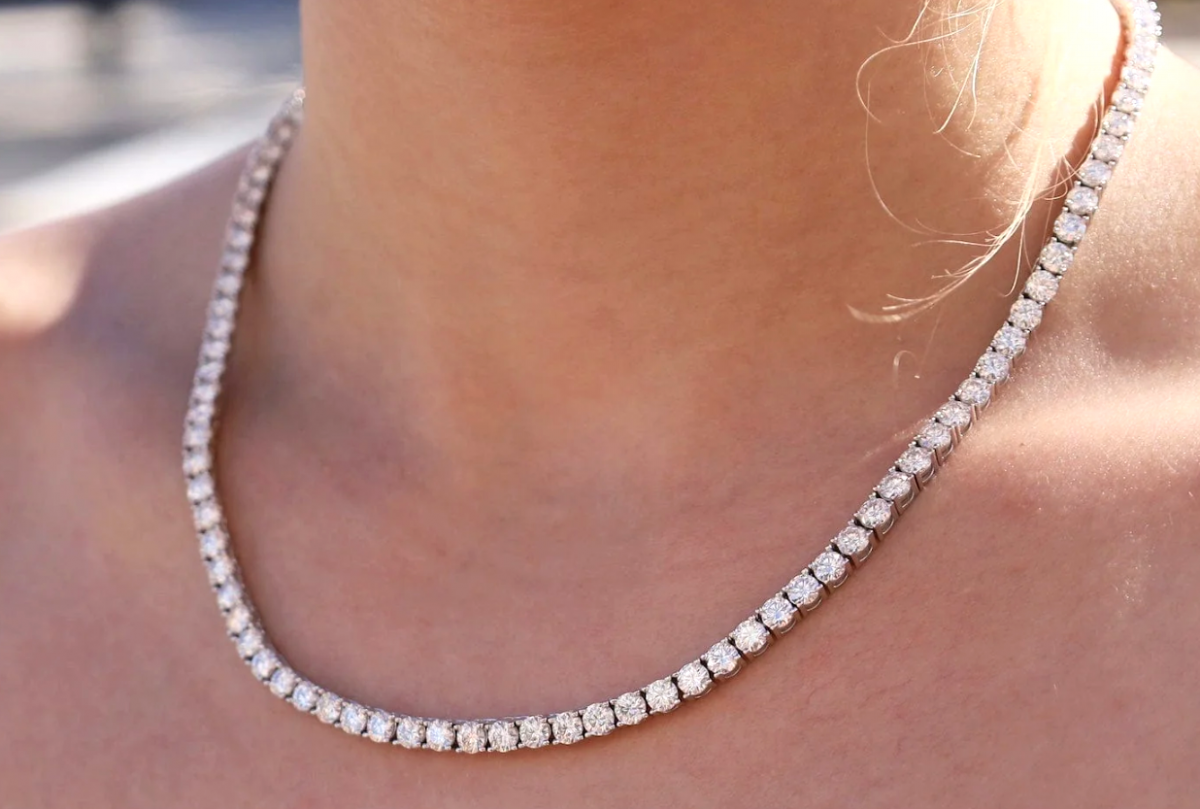
A tennis chain is a versatile piece of jewelry that works with both formal clothing and everyday outfits. Its defining feature is a continuous row of closely matched stones held in individual metal settings. These connected sections allow the necklace to curve naturally around the neck, creating an uninterrupted line of sparkle without a central pendant.
Although diamond tennis chains are particularly well known, the design is not limited to natural diamonds or precious metals. Lab-grown diamonds, colored gemstones, moissanite, and cubic zirconia offer different appearances and price points. Choosing a tennis chain involves more than finding an attractive design. Stone quality, setting construction, metal composition, necklace length, and clasp security determine how the piece looks, feels, and holds up to regular wear.
Understanding these details helps buyers recognize quality craftsmanship rather than relying on product photographs alone.
What Is a Tennis Chain?
A tennis chain necklace consists of a continuous row of gemstones or diamond simulants held in connected metal settings. Unlike conventional chains, where metal links form the main decorative element, a tennis chain draws attention to the stones. Most traditional designs feature round brilliant-cut stones arranged in a single row. Each stone has its own setting, connected to adjacent sections through small articulated joints. These joints allow the necklace to follow the contours of the neck without becoming rigid. Classic tennis chains maintain a consistent stone size and shape throughout their length.
Contemporary variations may incorporate graduated stones, multiple rows, or different gemstone cuts. The term tennis chain is especially common in contemporary jewelry retail and hip-hop-inspired fashion. Traditional jewelers may use descriptions such as diamond line necklace or rivière necklace for related designs, although these terms are not exact synonyms.
The History of Tennis Jewelry
The tennis chain history begins long before the name became popular. Jewelers had been creating flexible necklaces with continuous rows of gemstones for centuries, particularly in European fine jewelry. Traditional rivière necklaces often featured diamonds or colored gemstones arranged in a continuous sequence, sometimes graduated in size. Their relatively simple construction emphasized the stones rather than elaborate decorative metalwork.
Modern tennis chains share this visual principle, although their proportions, settings, and cultural associations have developed considerably. The connection to tennis emerged much later through an incident involving American tennis champion Chris Evert.
The Connection Between Tennis and Diamond Jewelry
The name tennis bracelet is closely associated with Chris Evert, who famously wore diamond jewelry during professional matches. During a US Open match, Evert’s diamond bracelet reportedly came loose, interrupting play while the jewelry was retrieved. The incident became part of jewelry history, although accounts differ on precisely when it occurred.
The frequently cited 1987 date is disputed, and Evert’s own recollections have placed the event earlier. The story helped establish the association between tennis and flexible diamond bracelets. Over time, the tennis bracelet became a widely recognized retail term for jewelry featuring a continuous row of stones. The name eventually extended to necklaces using similar construction. These became known as tennis necklaces or tennis chains, particularly as the design gained popularity beyond traditional fine jewelry.
How Tennis Chains Became Popular
Tennis jewelry acquired another cultural identity through hip-hop fashion during the late twentieth century. Early hip-hop jewelry frequently featured substantial gold chains, medallions, and personalized pendants. As diamond-set accessories became more prominent, tennis chains offered a different look: a continuous display of stones without the visual dominance of a large pendant. They also worked well with layered jewelry. Narrow designs could accompany heavier chains, while wider diamond tennis chains made an impression on their own.
Jewelry manufacturers gradually introduced more variations in width, length, stone arrangement, and metal finish. The availability of alternative gemstones and laboratory-grown diamonds further expanded the market. Today, tennis chains appear in traditional fine jewelry collections, contemporary streetwear, and everyday accessories. A slim tennis chain can look understated, while a wider version becomes a statement piece.
Different Types of Tennis Chains
Tennis chain styles vary according to gemstone type, metal composition, and setting design. These differences affect appearance, price, weight, and maintenance requirements.
Diamond and Gemstone Tennis Chains
A natural diamond tennis chain contains a continuous arrangement of mined diamonds, generally selected for consistent size, color, and visual characteristics. Matching is especially important because the stones appear directly beside one another. Even attractive individual diamonds can look inconsistent when their color or cutting proportions differ noticeably. Lab-grown diamonds provide another option. They have essentially the same chemical composition, crystal structure, and optical properties as natural diamonds. Unlike diamond simulants, they are genuine diamonds, although their origin, market prices, and resale characteristics differ.
Colored gemstones produce a different appearance. Sapphires, rubies, and emeralds can create a continuous band of color, either in a single shade or through alternating arrangements. Durability varies by gemstone. Sapphires and rubies have excellent scratch resistance, making them suitable for many frequently worn designs. Emeralds require more careful handling because inclusions and natural fractures can increase their vulnerability to damage. Moissanite and cubic zirconia are also used in tennis chains.
Moissanite is known for its pronounced fire, producing colorful flashes under suitable lighting. Cubic zirconia is generally less expensive but more susceptible to scratches and surface abrasion. Buyers should weigh the origin of the stones against their appearance, durability, and price.
Gold, Silver and Platinum Designs
Tennis chain materials influence more than color. Metal composition affects weight, maintenance, durability, and how securely the gemstones can be held in their settings. A gold tennis chain can be made from yellow, white, or rose gold. Yellow gold creates a warm contrast against white diamonds. White gold produces a cooler appearance, while rose gold introduces a subtle pink tone. Gold purity affects composition and working properties. Fourteen-karat gold contains approximately 58.3% pure gold, while eighteen-karat gold contains 75%. The remaining alloying metals influence hardness, color, and resistance to wear.
Higher gold content does not automatically mean a more durable necklace, since alloy formulation and construction also matter. White gold is frequently rhodium-plated to produce a bright white finish. This coating can gradually wear away, particularly where the jewelry experiences friction. A silver tennis chain is commonly made from sterling silver, containing 92.5% silver.
It offers a less expensive alternative to comparable solid-gold or platinum jewelry, although tarnishing and surface scratches may require more frequent attention. Platinum has a naturally white appearance and excellent resistance to corrosion. Its density gives platinum jewelry a substantial feel, while everyday wear can produce a characteristic surface patina. Unlike rhodium-plated white gold, platinum does not require plating to retain its underlying white color. Buyers with metal allergies should check the complete alloy composition rather than relying on the color or purity marking alone.
Tennis Chain vs Tennis Bracelet
The tennis chain vs tennis bracelet comparison starts with their shared construction. Both feature a continuous row of stones held in flexible, connected settings. Their main differences involve length, proportions, and the demands of everyday wear.
| Feature | Tennis chain | Tennis bracelet |
| Placement | Around the neck | Around the wrist |
| Typical length | Approximately 16–24 inches, with longer options available | Commonly 6.5–8 inches |
| Appearance | Single or multiple rows of stones | Usually a single row |
| Movement | Follows the neckline and upper chest | Moves with the wrist and hand |
| Fit considerations | Neck circumference, drop, and flexibility | Wrist circumference, movement, and clasp security |
A bracelet regularly encounters desks, sleeves, and other surfaces, exposing its settings to more frequent contact. A necklace generally avoids some of these impacts, although its greater length places different demands on alignment and flexibility. Both designs require secure settings and reliable clasps. The appropriate proportions depend on where the jewelry is worn and how frequently it will be used.
How to Choose the Right Tennis Chain
A good tennis chain should sit comfortably, maintain its shape, and keep every stone securely in place. Product photographs rarely reveal how smoothly the settings move or whether the necklace twists when worn. Before purchasing, compare dimensions, gemstone specifications, metal markings, and clasp construction. For expensive pieces, independent examination may reveal details that are difficult to assess from a product listing.
Chain Length and Width
Tennis chain length determines where the necklace rests, while width controls how prominent it appears. Common necklace lengths include:
| Length | Typical fit and appearance |
| 16 inches | Close to the base of the neck on many adults |
| 18 inches | Near the collarbone, depending on neck size |
| 20 inches | Slightly below the collarbone |
| 22 inches | Lower on the upper chest |
| 24 inches | A longer, more relaxed drop |
These positions are approximate. Neck circumference, shoulder proportions, and the necklace’s construction influence the actual fit. Width measurements also deserve attention. Some retailers describe width using the approximate diameter of the stones, while others measure the complete setting. Checking the manufacturer’s specifications helps prevent confusion. A 2 mm chain usually has a delicate appearance. Designs measuring 3–4 mm stand out more, while widths of 5 mm or greater create a bolder effect. Two chains of identical width can have very different total carat weights and prices.
Stone dimensions, setting thickness, and metal content all contribute to the difference. Clothing matters as well. Shorter necklaces may sit beneath high collars, while longer designs can overlap buttons or other accessories. The most dependable way to choose a length is to try on a comparable necklace or position a flexible measuring cord where the finished piece should rest.
Stone Quality and Setting
For diamond jewelry, the traditional four Cs provide a useful starting point: cut, color, clarity, and carat weight. Cut quality influences how a diamond reflects and returns light. Color and clarity affect its appearance, while carat measures weight rather than diameter. With a tennis chain, the combined appearance of the stones matters as much as their individual characteristics. Consistent proportions and color help maintain the continuous visual effect. Total carat weight, abbreviated TCW or CTW, represents the combined weight of the diamonds in the necklace. It should not be confused with the weight of a single stone. For example, a 5-carat tennis chain containing dozens of small diamonds will look substantially different from a piece featuring one 5-carat diamond. Setting design also affects the necklace’s appearance and practicality.
- Prong settings: Small metal claws hold each stone while leaving much of its surface visible.
- Bezel settings: A metal rim surrounds the stone, providing additional protection around its edges.
- Shared-prong settings: Adjacent stones share some of their securing prongs, reducing the amount of visible metal.
No setting style guarantees security on its own. The quality of the metalwork, stone placement, and finishing ultimately affects how securely the stones are held. Inspect the necklace from both sides. Settings should align evenly, with no visibly distorted joints or projecting metal edges. The necklace should bend smoothly without forcing adjacent stones against one another.
Clasp Design and Security
The tennis chain clasp is a small component with an important responsibility: keeping the entire necklace securely fastened. Many tennis chains use a box clasp, sometimes accompanied by a side safety latch or figure-eight safety catch. These mechanisms provide a discreet closure that can blend into the surrounding settings. Lobster clasps are another option, particularly on lighter or more contemporary designs.
Their suitability depends on the necklace’s weight and the strength of the connecting components. A properly functioning clasp should close with a definite engagement and remain secure during normal movement. Excessive resistance, looseness, or visible deformation may indicate a problem. Check the connecting rings and solder joints as well.
A strong clasp offers little protection if the attachment between the closure and necklace is weak. For expensive diamond jewelry, an additional safety mechanism can reduce the likelihood of accidental loss if the primary closure opens.
Vintage and Modern Tennis Chain Styles
Vintage tennis jewelry often differs from modern designs in gemstone proportions, cutting styles, and metalwork. Older diamond line necklaces may contain graduated stones, individually crafted settings, or clasp mechanisms characteristic of their period. Antique diamond cuts can also produce different patterns of reflected light compared with modern round brilliant stones. Condition is particularly important when evaluating older jewelry. Worn prongs, weakened joints, and previous repairs can affect whether a necklace is suitable for regular use. Modern manufacturing allows jewelers to produce consistent stone settings and standardized dimensions. Computer-aided design can improve precision, although the quality of finishing still varies between manufacturers. Neither age nor manufacturing method guarantees better craftsmanship.
A carefully restored older necklace may remain highly functional, while a modern piece may offer easier access to replacement components and more consistent sizing. For vintage pieces, condition and craftsmanship matter more than age alone.
How to Wear and Style a Tennis Chain
Learning how to style a tennis chain starts with its proportions. A narrow necklace can complement an outfit without becoming the main accessory, while a wider design naturally attracts more attention. For a restrained appearance, a narrow chain near the collarbone works well with plain shirts, knitwear, and open-neck jackets. The stones add subtle sparkle without overwhelming the outfit. Wider chains create stronger contrast against simple clothing, particularly dark shirts and crew-neck tops. Their appearance depends not only on stone size but also on how the necklace sits against the fabric. Layering works best when individual pieces have enough separation. Two necklaces of nearly identical length may overlap or become tangled, especially when both have closely spaced settings. Combining a shorter tennis chain with a longer, simpler metal chain keeps the necklaces visually distinct. Pendant necklaces can also work, provided the pendant does not repeatedly strike the stones. Mixing metals is another possibility. Yellow gold tennis chains can be paired with silver-toned accessories, while repeating one metal color elsewhere in the outfit creates a more deliberate combination. Formal clothing often benefits from a single diamond or gemstone necklace. Casual outfits allow more experimentation with different widths, textures, and lengths. A tennis chain can also be paired with a bracelet. The pieces do not need identical stones or settings, although complementary proportions and metal finishes can create a coordinated appearance. When the necklace is already visually prominent, limiting other large accessories often produces a cleaner result.
Cleaning and Caring for Tennis Chain Jewelry
Knowing how to clean a tennis chain helps preserve its appearance without putting the gemstones or settings at unnecessary risk. Skin oils, cosmetics, and residue accumulate around gemstones and their settings. This buildup can reduce brilliance by interfering with the passage of light through the stones. For many diamond tennis chains with secure settings, mild dish soap mixed with lukewarm water is suitable for routine cleaning. Gently brush accessible areas with a soft brush, rinse carefully over a separate container rather than an open drain, and dry with a lint-free cloth. Cleaning methods must be adapted to the gemstones and any treatments they have received. Emeralds, for example, may contain fracture-filling materials that can be affected by heat, chemicals, or aggressive cleaning. Ultrasonic cleaners can worsen existing weaknesses in stone settings, while steam and cleaning solutions may damage certain treated gemstones. A professional jeweler should assess the piece before either method is used. Daily care is relatively straightforward:
- Remove the necklace before swimming, exercising, or activities involving impact.
- Apply perfume, hairspray, and cosmetics before putting on jewelry.
- Store the chain flat or in a soft-lined compartment to reduce twisting and abrasion.
- Avoid pulling on the necklace when removing tangled clothing.
- Check periodically for loose stones, damaged prongs, or unusual clasp movement.
Keeping a tennis chain separate from heavier jewelry reduces the chance of scratched metal, tangled sections, or damage to exposed settings. Frequently worn or valuable necklaces also benefit from professional inspection. A jeweler can identify worn components and loose stones before they cause more extensive damage. Diamond hardness does not make the necklace indestructible. Diamonds can chip under sufficiently strong impacts, while metal settings remain vulnerable to bending, scratching, and gradual wear.
FAQ
Why is it called a tennis chain?
The name comes from the tennis bracelet, a term associated with Chris Evert after her diamond bracelet reportedly came loose during a US Open match. It was later extended to necklaces featuring a similar continuous row of stones.
Can you wear a tennis chain every day?
Yes, provided the necklace is well constructed and suitable for regular wear. Secure settings, durable metal, and a reliable clasp are important. Removing the necklace during sports, swimming, and physical work helps reduce damage.
What is the best length for a tennis chain?
An 18–20-inch necklace is a versatile starting point for many adults. Shorter lengths sit closer to the neck, while 22–24-inch designs extend farther down the chest. The ideal length depends on neck circumference, clothing, and personal preference.
Are lab-grown diamond tennis chains real diamond jewelry?
Yes. Lab-grown diamonds are genuine diamonds with essentially the same chemical composition and physical properties as natural diamonds. Their origin, typical market prices, and resale characteristics differ. They should not be confused with moissanite or cubic zirconia.
How can you tell whether a tennis chain is good quality?
Examine stone consistency, setting alignment, flexibility, metal markings, and clasp construction. For diamond jewelry, confirm whether the stones are natural or lab-grown and check the total carat weight and available quality specifications. An independent appraisal or professional inspection can provide additional assurance before an expensive purchase.